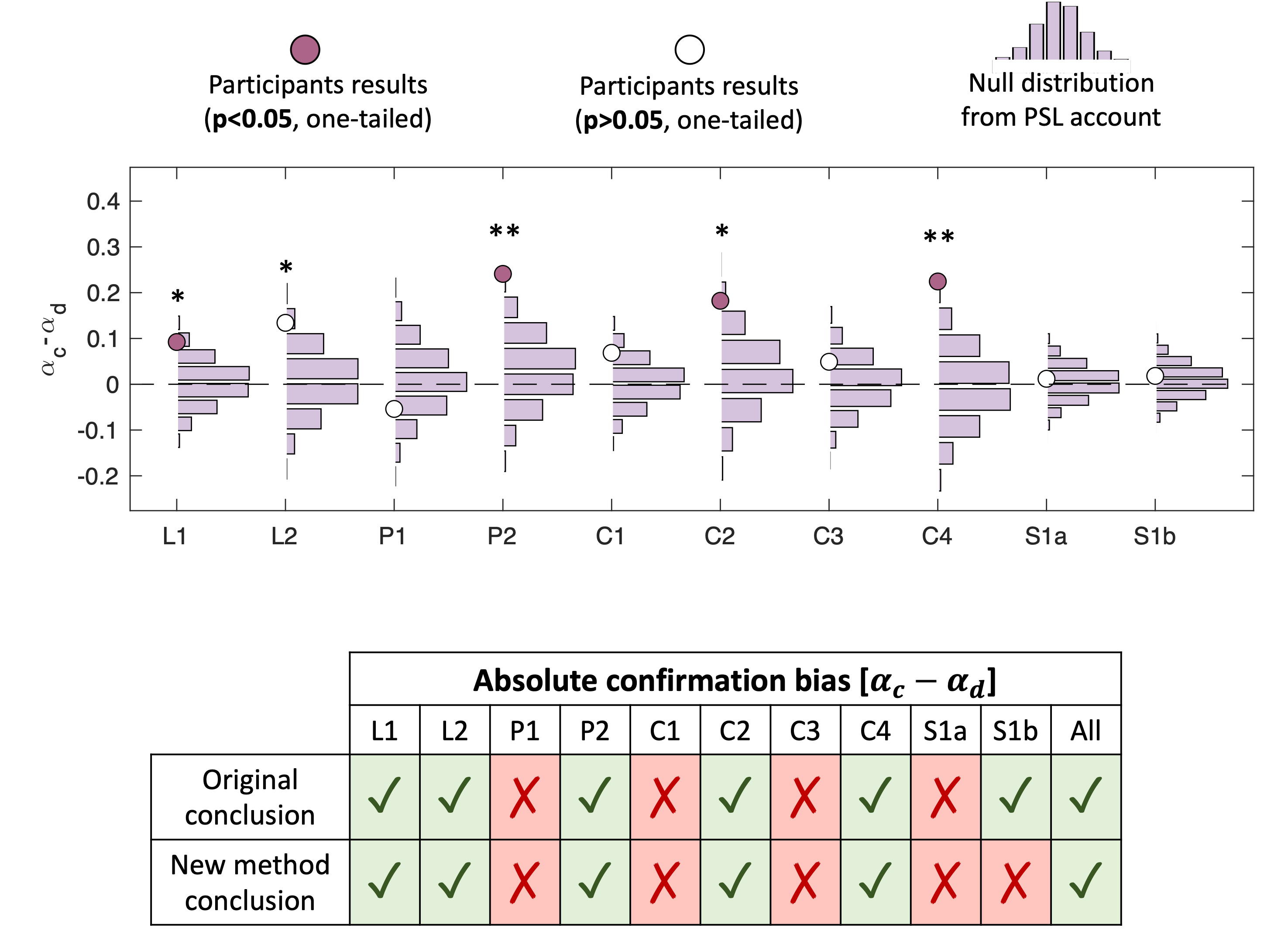
Learning asymmetry or perseveration? A critical re-evaluation andsolution to a pervasive confound (preprint)
When two distinct mental processes produce very similar behavior, how do we know which one is pulling the strings?
When two distinct mental processes produce very similar behavior, how do we know which one is pulling the strings?
Short workshop introducing the principles of computational modelling of behavioral data, using reinfrocement learning models as an example (created for the UCL-PKU Summer School for Experimental, Methodological and Computational Design in Psychology)